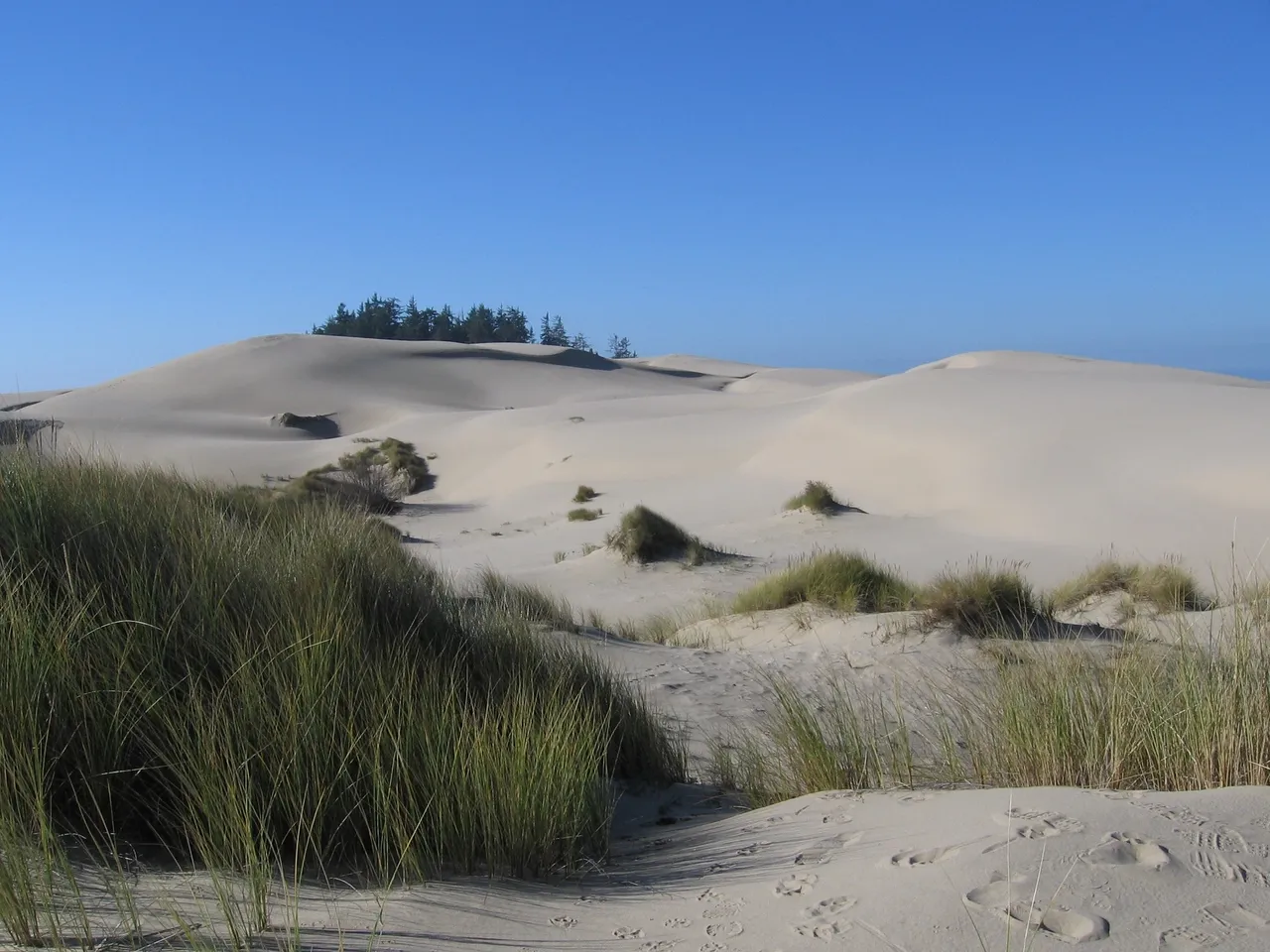
The Oregon Dunes are a complex and dynamic landscape with a history that spans over 100,000 years. The formation of these dunes is a result of a combination of geological processes, climatic changes, and the influence of human activity over time.
Formation and Age
The dunes were primarily formed through the weathering and erosion of the Oregon Coast Range mountains. Over millions of years, these processes broke down the rocks into smaller particles, which were then transported by rivers to the ocean. The sand accumulated at the mouths of rivers, such as the Umpqua, Siuslaw, and other smaller rivers, and was subsequently shaped by the forces of wind, waves, and tides[2][3][12].
The oldest parts of the dune system are well over 100,000 years old, with the youngest dunes, closest to the ocean, forming over the last 7,000 years[13]. The dunes have undergone significant changes throughout their history, influenced by factors such as volcanic eruptions, shifting tectonic plates, and massive floods that occurred over 45 million years ago[2]. These events contributed to the formation of the mountains and rivers in Oregon, which in turn influenced the development of the dune landscape.
Geological and Climatic Influences
The dunes are the product of millions of years of erosion by wind and rain on the Oregon Coast, making them the largest expanse of coastal sand dunes in North America[3]. The sand that forms the dunes originates from the Coast Mountain Range, and the process of erosion has been moving sedimentary rock from these mountains for thousands of years[6].
The formation of the dunes is also closely tied to changes in sea levels and climate. During periods of lower sea levels, sand was deposited on the emerged inner-continental shelf, which was then reworked by waves during the Holocene marine transgression[1][9]. The dunes have always been in motion, shaped by the landscape and the life it has sustained[2].
Human Impact
Human activity has also played a role in the evolution of the Oregon Dunes. In the early 1900s, as coastal communities developed, the shifting sands were seen as a menace, leading to the introduction of non-native plant species such as European beachgrass to stabilize the dunes[6]. This, along with other invasive species, has dramatically changed the face of the dunes, affecting the native plant and animal life and altering the natural dynamics of this unique ecosystem[6][12].
In summary, the Oregon Dunes are a product of natural geological and climatic processes that have been occurring for over 100,000 years, combined with more recent human interventions. Their formation is a testament to the dynamic and ever-changing nature of the Earth’s surface.
Citations:
[1] http://glaciers.pdx.edu/fountain/readings/TopicsInGeomorphology/PetersonEtAl2007_ORduneSheets.pdf
[2] https://www.saveoregondunes.org/learn/what-makes-a-dune/
[3] https://en.wikipedia.org/wiki/Oregon_Dunes_National_Recreation_Area
[4] https://pubs.oregon.gov/dogami/og/OBv35n05.pdf
[5] https://www.fs.usda.gov/recarea/siuslaw/recarea/?recid=42465
[6] https://visittheoregoncoast.com/travel-guides/landmarks/oregon-dunes-restoration/
[7] https://pubs.oregon.gov/dogami/ims/ims-028/unit14.htm
[8] http://www.oregonwild.org/about/blog/walking-sand-wonder-oregon-dunes
[9] https://pubs.usgs.gov/publication/70031487
[11] https://www.fs.usda.gov/detail/siuslaw/recreation/ohv/
[13] https://www.oregonencyclopedia.org/articles/oregon_dunes/
[14] https://www.sciencedirect.com/science/article/pii/S0169555X07000505