Foragers can find a variety of edible mushrooms in the Mapleton, Oregon area. The region’s diverse ecosystems, including coastal ranges, the Cascades, and lush forests, provide ideal conditions for a wide range of mushrooms. Here are some of the notable edible mushrooms you might encounter:
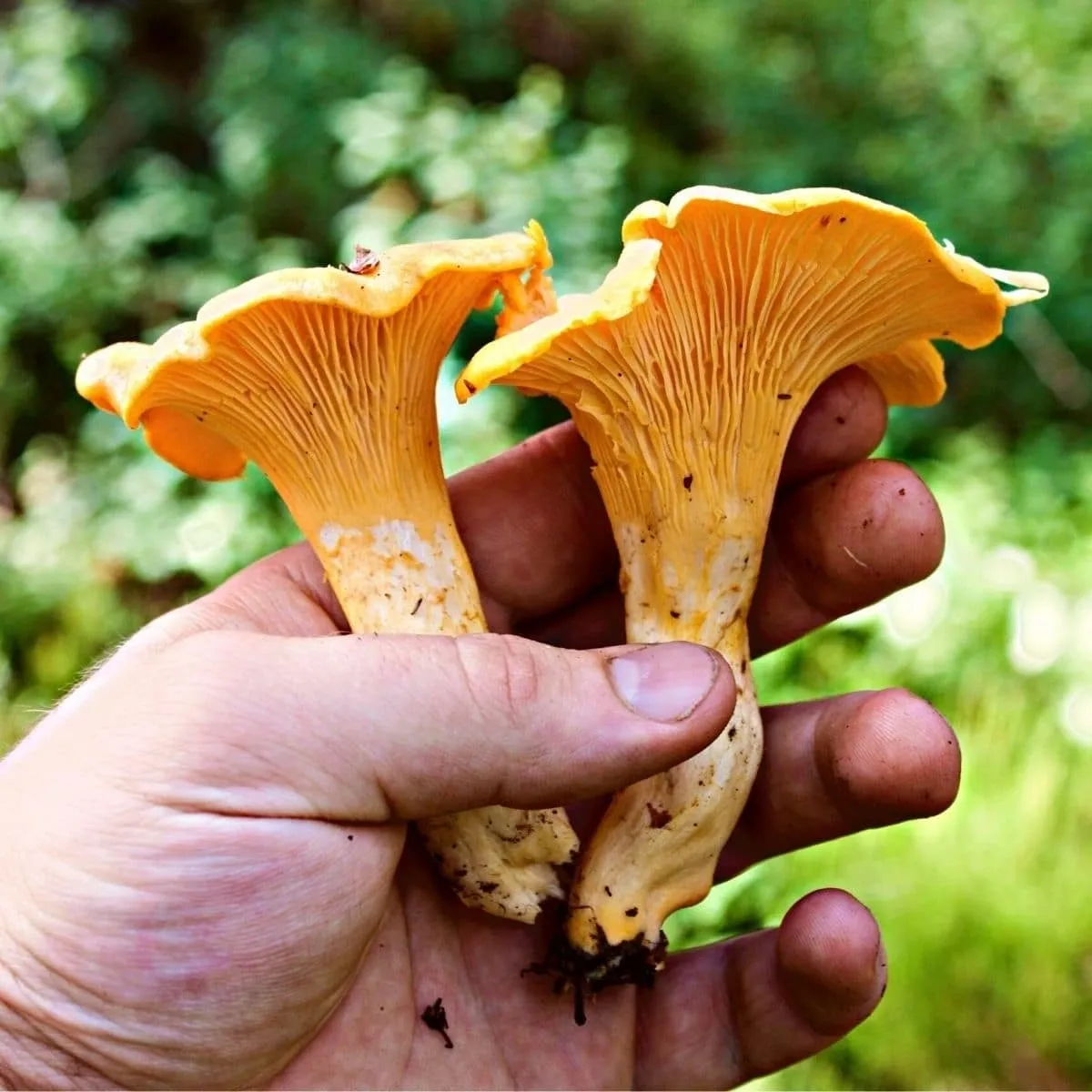
Chanterelles (Cantharellus spp.)
– Description: Chanterelle mushrooms are known for their distinctive flute shape, ranging from salmon to orange in color. They have a meaty texture and a sweet, apricot-like flavor. They are also recognized as Oregon’s official state mushroom and can be identified by their ability to peel like string cheese.
– Season: Primarily found in the fall.
Morels (Morchella spp.)
– Description: Morels are brown, spongy, and conical, celebrated for their nutty, earthy flavor.
– Season: Typically seen in the spring.
American Matsutake (Tricholoma magnivelare)
– Description: These mushrooms are prized for their unique flavor, which some describe as a blend of cinnamon and dirty socks. They are white and large, with a long stipe.
– Season: Fall.
King Boletes (Boletus edulis)
– Description: Also known as porcini, these mushrooms can grow quite large, with a cap resembling a hamburger bun and a bulbous tan stipe.
– Season: Varies, but often found in late summer to fall.
Cauliflower Mushrooms (Sparassis spp.)
– Description: Named for their resemblance to cauliflower, these mushrooms have a texture similar to cooked egg noodles and are excellent in soups.
– Season: Typically found in the fall.
Lobster Mushrooms (Hypomyces lactifluorum)
– Description: These are not true mushrooms but a parasitic fungus that infects other mushrooms, turning them a vivid orange or red. They have a faint scent of seafood.
– Season: Summer to fall.
Hedgehogs (Hydnum spp.)
– Description: Known for their distinctive spiny undersides instead of gills or pores.
– Season: Primarily found in the fall.
Oregon Polypore (Ganoderma oregonense)
– Description: A type of medicinal mushroom rather than a culinary one, but still notable.
Chicken of the Woods (Laetiporus conifericola)
– Description: This mushroom grows on conifers and has a vibrant orange-yellow appearance with a flavor reminiscent of chicken.
– Season: Late summer to fall.
Rainbow Chanterelles
– Description: Similar to regular chanterelles but may vary in color.
– Season: Late summer to fall.
When foraging for mushrooms, it’s crucial to follow safety guidelines:
– Always be 100% certain of a mushroom’s identity before consuming it. When in doubt, do not eat it.
– Use multiple field guides or consult with experts to confirm identifications.
– Be aware of the legal requirements and ethical considerations, such as obtaining permits for certain areas and not overharvesting.
Mapleton and the surrounding areas in Oregon offer a rich variety of mushrooms due to the state’s diverse ecosystems. Whether you’re a seasoned forager or a beginner, always prioritize safety and sustainability in your mushroom hunting endeavors.
Citations:
[2] https://www.eugenecascadescoast.org/blog/post/mushroom-forage/
[3] https://oregondiscovery.com/wild-edible-mushroom
[4] https://www.inaturalist.org/guides/11086
[6] https://www.oregonencyclopedia.org/articles/matsutake-mushrooms/
[7] https://www.eugenecascadescoast.org/blog/post/guide-to-mushrooms/
[8] http://www.eugeneoutdoors.com/finding-identifying-chanterelle-mushrooms-in-oregon/
[9] https://www.outdoorproject.com/travel/where-find-mushrooms-pacific-northwest
[10] https://solesofmytravelingshoes.com/foraging-chanterelle-mushrooms-on-the-oregon-coast/
[11] https://matadornetwork.com/read/hunt-mushrooms-oregon-coast/