Introduction
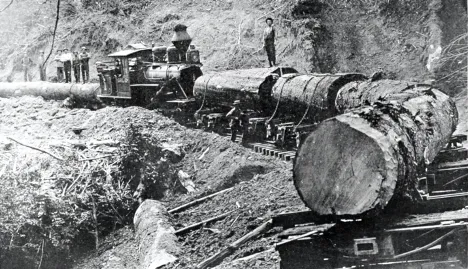
Oregon’s timber industry has been a driving force in the state’s economy since the late 19th century. With the development of rail lines in the 1870s and 1880s, the forested valleys of the western Cascades and the ponderosa pine stands of eastern Oregon became centers of lumber production. Oregon became the nation’s leading producer of wood by 1938. The state has been at the forefront of logging practices, originally using steam donkeys and later adopting electric tools and modern chainsaws, which increased productivity and efficiency.
The history of the forest industry in Mapleton, Oregon, is intertwined with the broader history of forestry in the state and the Siuslaw region. The first forest ranger in the Siuslaw area was Carl Young, and the Knowles family were among the pioneers in the area. The Siuslaw National Forest’s history reflects the development of the forest industry in the region, with significant changes occurring over the decades.
The pattern of logging in the Siuslaw Basin, which includes Mapleton, reflects the “checkerboard” land ownership resulting from the Oregon and California Railroad land grant. In the western half of the basin, most of the uplands are within the Siuslaw National Forest, with scattered in-holdings of private, industrial forestland.
Today
The current state of the forest industry in Mapleton, Oregon, reflects the overall trends and conditions of the forestry sector in the state. Oregon is the largest softwood lumber producer in the U.S., with forestry and wood products being more concentrated in rural areas like Mapleton than any other target industry groups in the state. The industry is vital to the economic prosperity of many rural communities, providing high-paying jobs and supporting local economies.
The state’s forests, predominantly Douglas fir, are known worldwide for their quality, and Oregon’s climate and soils are considered some of the best for softwood growth. The forestry sector in Oregon has become more competitive since 2009, with employment growing by 15 percent, which is significantly higher than the national average.
However, the industry also faces challenges, such as the need for a secure and reliable forest industry to utilize logs harvested from family forests. Environmental concerns have also been a significant factor in the management of forest resources. For instance, a lawsuit in the 1980s protected old growth on steep slopes in the Mapleton Ranger District to prevent landslides, reflecting the tension between logging activities and environmental conservation.
Moreover, the state of Oregon has been working on developing a Habitat Conservation Plan to ensure both habitat protection for threatened and endangered species and timber revenue in the future. This plan aims to provide certainty and steadiness over the next 70 years, benefiting rural communities in terms of revenue while also addressing environmental concerns.
Technological advancements in the timber industry, particularly in logging equipment and sawmills, have significantly reduced labor requirements since the 1980s. This has led to a decline in employment within the industry in Oregon, mirroring trends in Washington and British Columbia.
In recent years, events such as wildfires have also impacted the forest industry, as seen with a forest fire in Mapleton in 2020 that slowed traffic on Highway 126. Such events can have short-term effects on timber production and long-term implications for forest management and health.
Forecast
The forest industry in Mapleton remains a critical part of the local economy, with a focus on sustainable management and balancing economic growth with environmental stewardships, as well as forest industry remains a significant part of Oregon’s economy, with the state being a top U.S. producer of softwood lumber and plywood. Oregon has also become a leader in manufacturing innovative engineered wood products such as cross-laminated timber. The forest industry in Mapleton, Oregon, is part of a larger historical context of timber production in the state, characterized by pioneering efforts, technological advancements, and a significant contribution to the local and state economy.
Citations:
[1] https://www.jstor.org/stable/20613361
[2] https://www.fs.usda.gov/detailfull/siuslaw/learning/history-culture/?cid=fsbdev7_007152
[4] https://worldforestry.org/tracing-oregons-timber-culture/
[5] https://www.oregonencyclopedia.org/articles/timber_industry/
[6] https://oregonexplorer.info/data_files/OE_location/northcoast/documents/NorthCoastPDFs/siuslaw.pdf
[8] https://oregonforests.org/history
[9] https://www.hmdb.org/m.asp?m=93894
[10] https://www.loc.gov/item/2017760765/
[11] https://www.oregon.gov/odf/Documents/workingforests/oregonstimberharvests.pdf
[12] https://www.opb.org/article/2020/09/22/timber-wars-episode-3-the-owl/
[13] https://www.oregon.gov/biz/programs/homeareas/byboregon/targetindustries/pages/forestry.aspx
[15] https://www.oregon.gov/odf/board/bof/20230607-bof-record-item-01.pdf
[17] https://www.orforestdirectory.com
[18] https://www.opb.org/article/2020/09/22/timber-wars-episode-3-the-owl/
[19] https://www.opb.org/article/2022/12/13/oregon-state-forests-deliver-more-than-97m-in-timber-revenue/
[20] https://kval.com/news/local/wildfire-in-mapleton-slows-traffic-on-highway-126-in-lane-county
[21] https://www.fs.usda.gov/detail/siuslaw/about-forest/offices/?cid=fsbdev7_007267
[22] https://obits.oregonlive.com/us/obituaries/oregon/name/don-lee-davidson-obituary?id=21320239
[24] https://www.legacy.com/us/obituaries/registerguard/name/justin-walker-obituary?id=18170295
[25] https://ir.library.oregonstate.edu/downloads/h128nf919
[26] https://www.legacy.com/us/obituaries/deseretnews/name/lillian-mcdonald-obituary?id=28445475
[27] https://oregonexplorer.info/data_files/OE_location/northcoast/documents/NorthCoastPDFs/siuslaw.pdf